Quinta do Palato among the vineyards of Muxagata
The Estate

It all began with one wine.

Before the brand, the winery and the ranges, there was a small vineyard in Muxagata and the desire to discover what it could give.

2007 — 2008

The first wine came before the project.

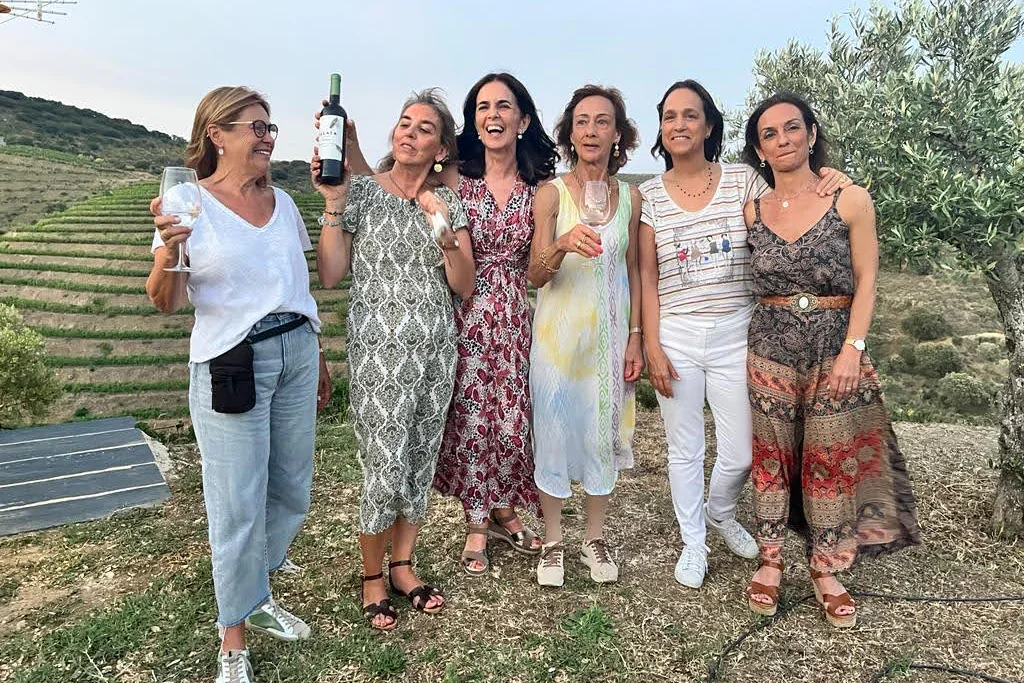
In 2007, Carloto Magalhães made a wine with grapes from the estate. He liked the result and invited five friends to taste it. In 2008, the six bought the property.

At the time there was no electricity in the winery. The wine was made in a shed lent by the neighbour at Canameira — the improvised beginning of a house that still prefers to grow at the pace of the vineyard.

Friendship stayed at the centre. Not as a campaign line, but as a way to decide, taste and share the work.

38 haTotal estate area
22.7 haAgricultural area
20.9 haPlanted vineyard
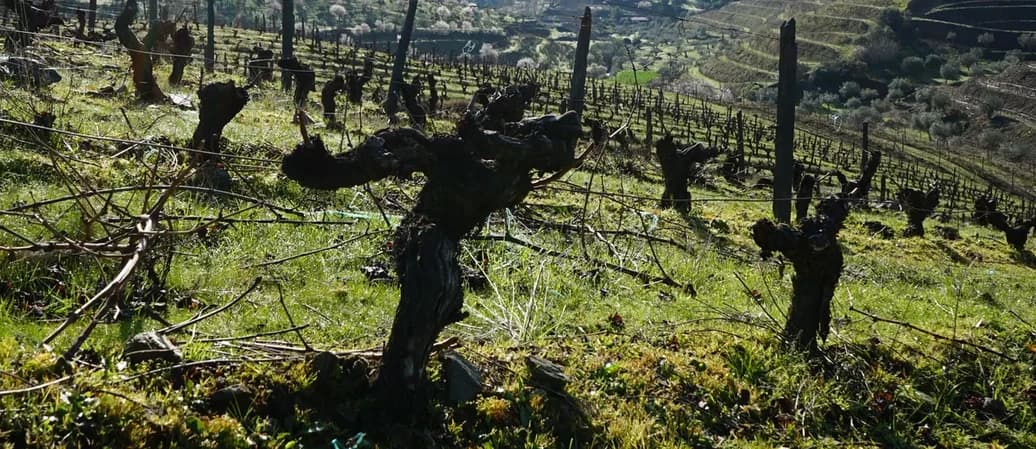
4 haVines over 60 years old
Inside the estate
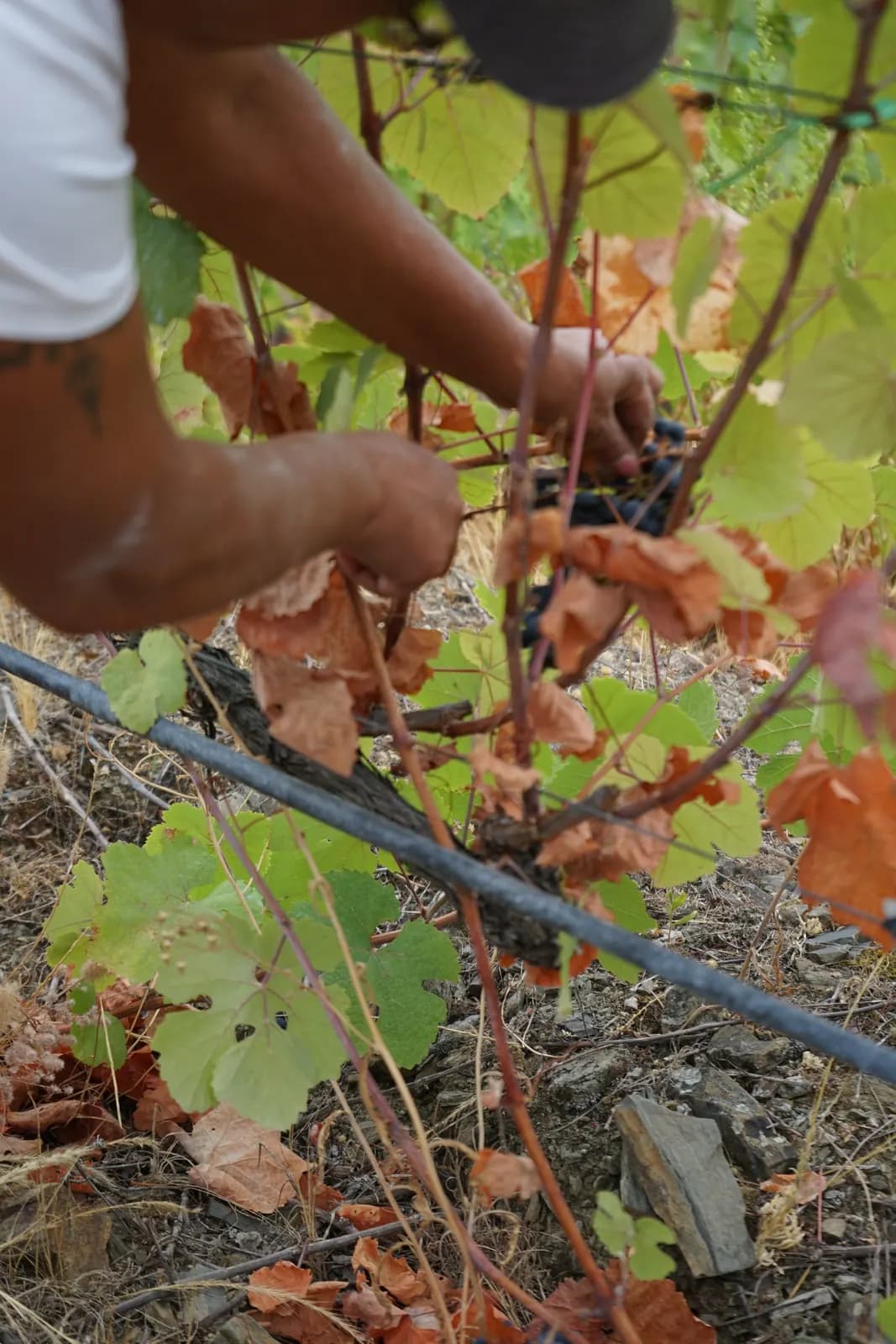
An old vine in the foreground, the vineyard climbing the slope
01

The vineyard grew slowly, plot by plot.

In 2008 there were 9.2 hectares. The other vines came later, at different altitudes and aspects: Vinha do Anacoreta, Vinha do Piloto and Canada da Moura.

The whites live down by the stream, where the air is cooler: they are the last to catch the morning sun and the first into afternoon shade. That delay helps preserve their acidity.
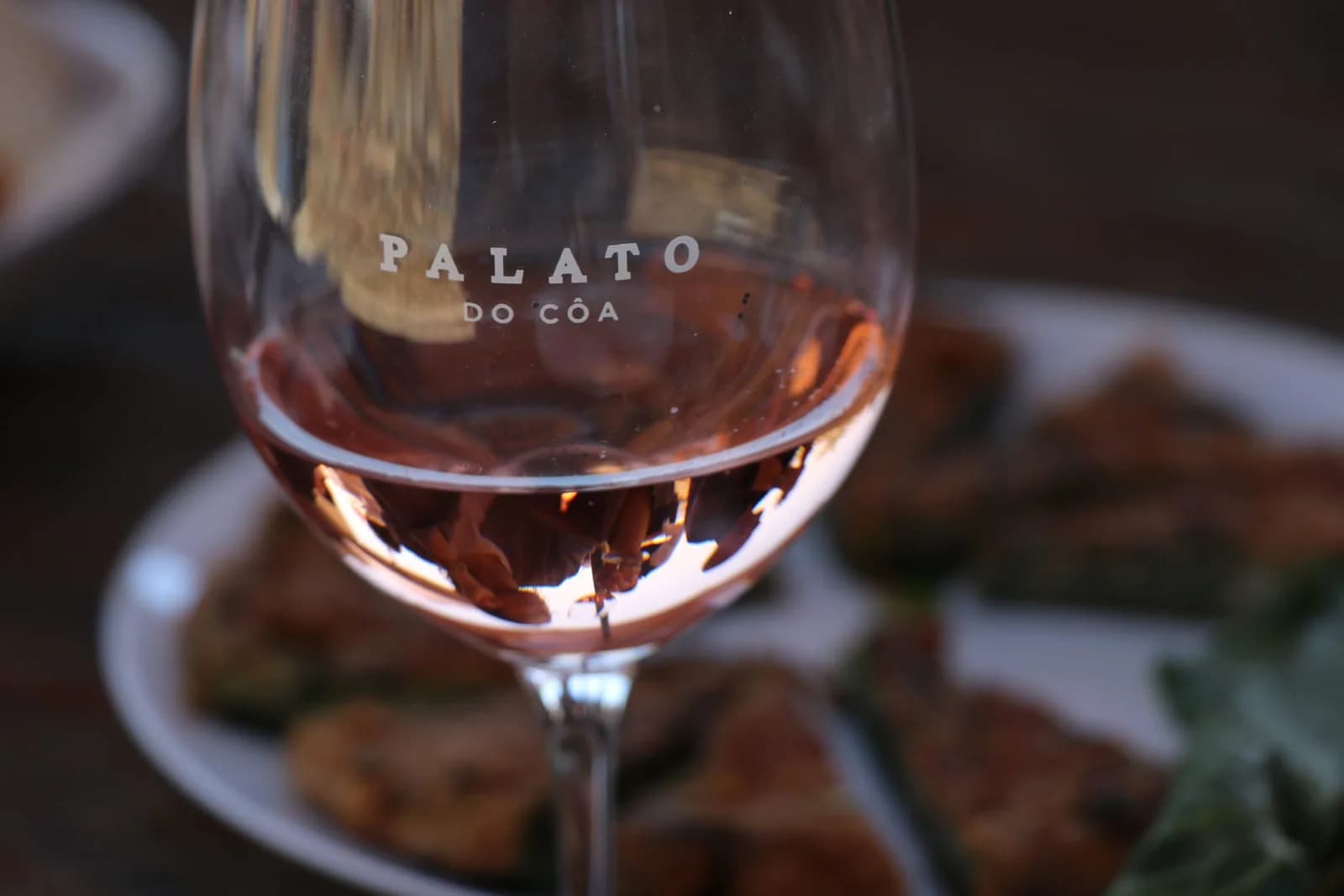
Palato do Côa lettering etched on a glass
02

Giving the wine a name.

The name Palato began as a temporary solution and ended up staying. The first label was created by Mariana Castro Lemos and was built around two strong “P”s, the origin of the brand’s first visual identity.

On the Vinhas do Côa labels are the valley engravings: horses, aurochs and goats left on the schist by palaeolithic hands.

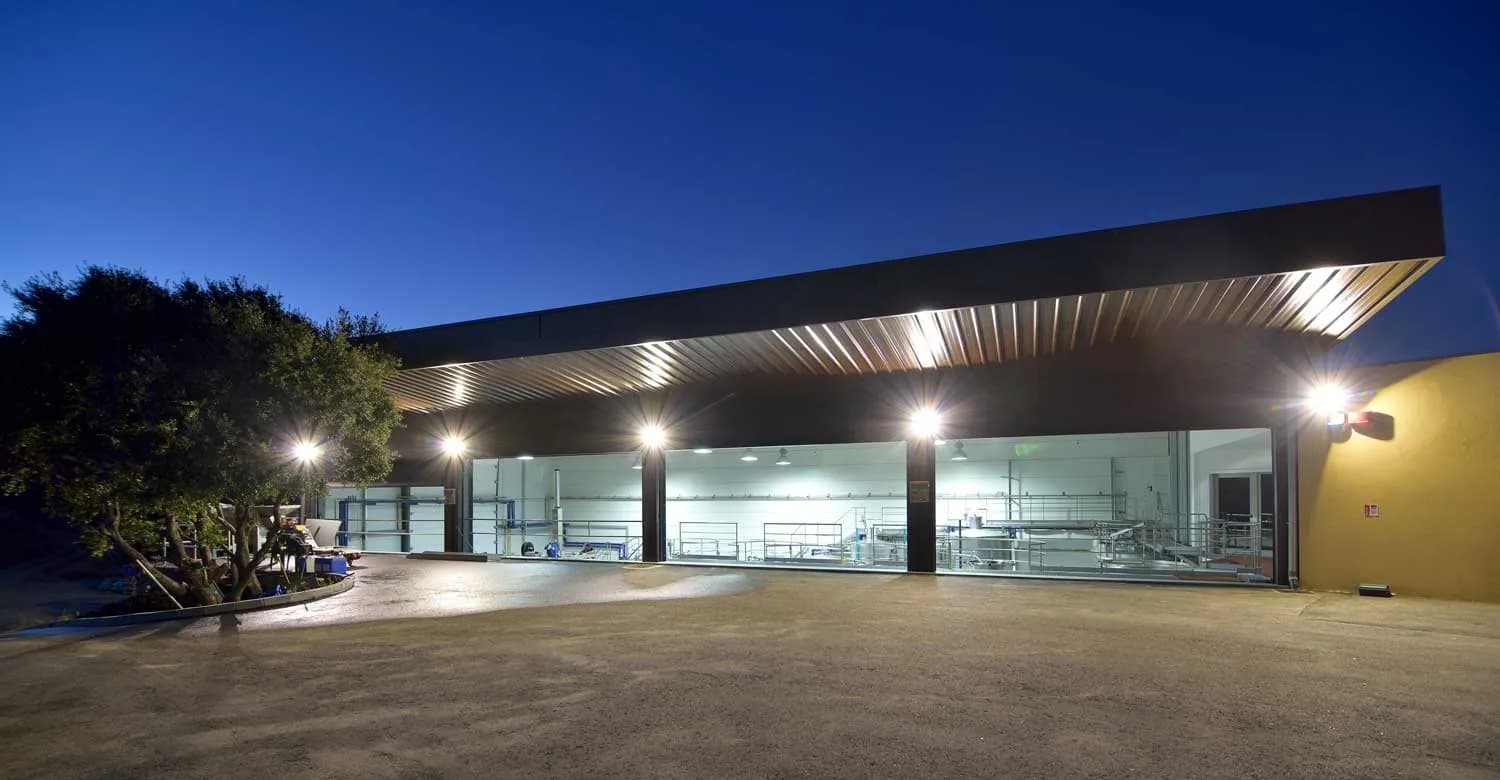
The Quinta do Palato winery at dusk
03

A winery built to follow every wine.

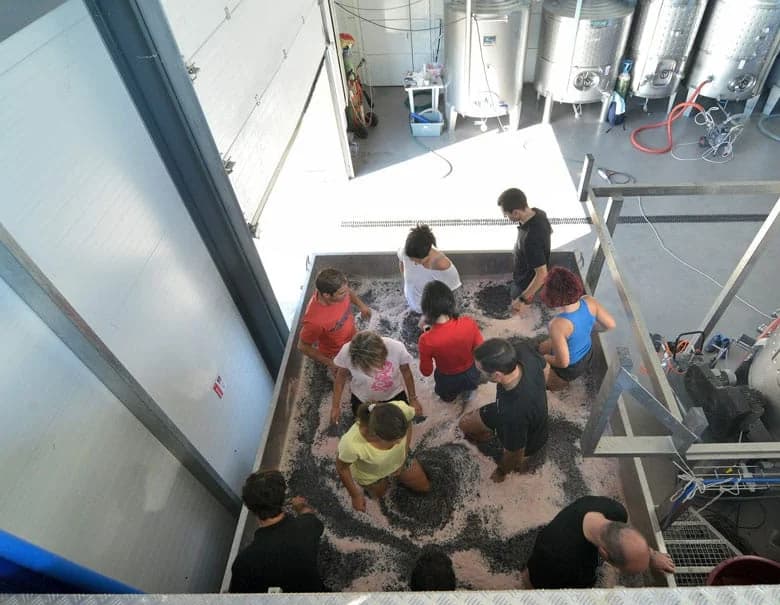
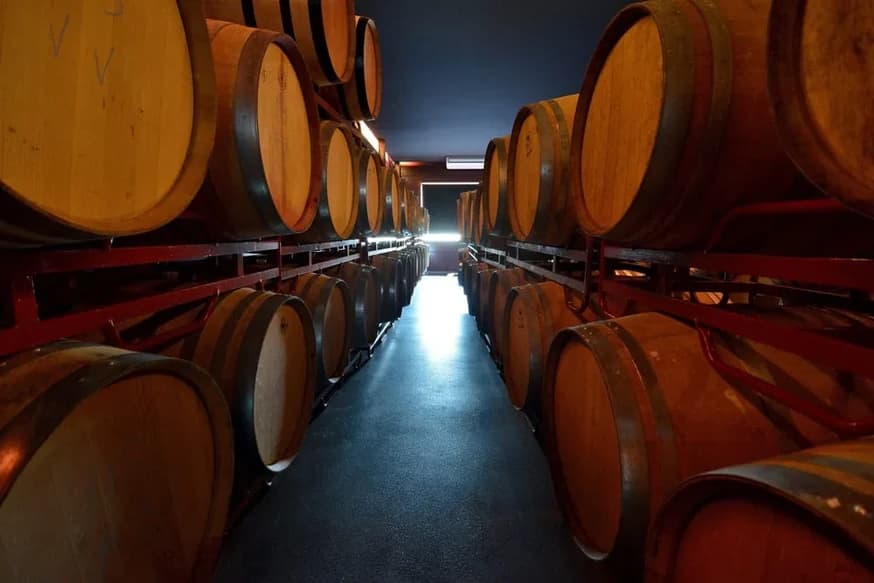
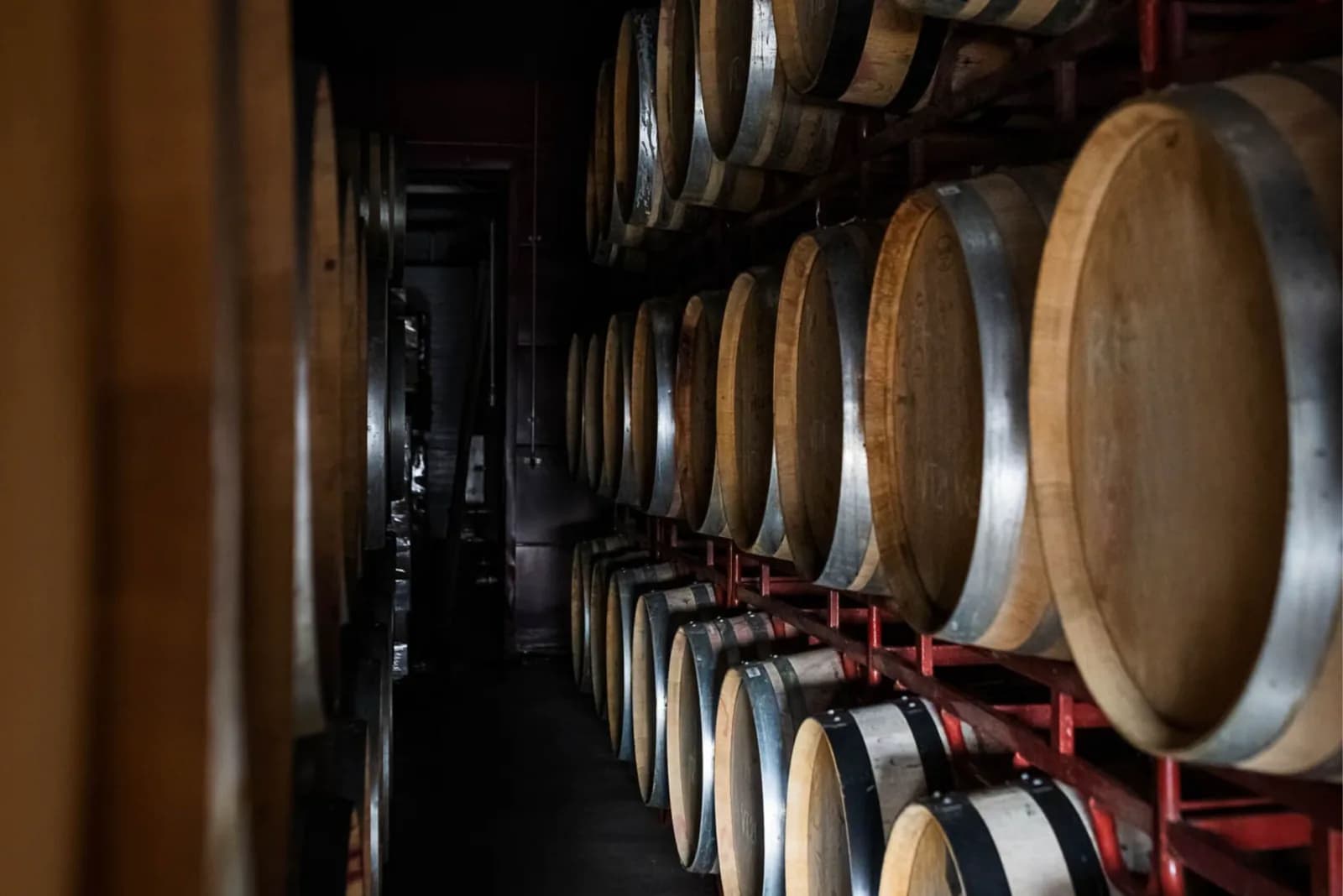
Built in 2012, the winery brought the wine to the heart of the estate. Temperature-controlled vats and a barrel room with controlled temperature and humidity allow precise work without losing the human touch.

French oak gives more elegant notes; American oak gives vanilla and caramel. The barrel room is kept between 75 and 80% humidity.

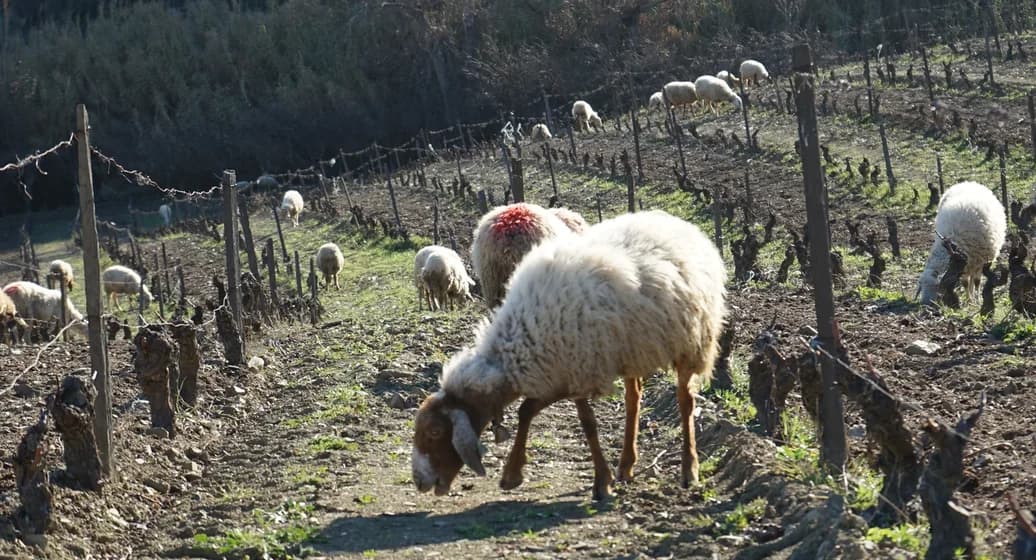
Sheep among the dormant vines
04

Caring for the land is preparing the next harvest.

Cover crops protect the soil between the rows. The vineyard is not cleared with herbicide: during dormancy, sheep eat what has grown between the vines.

The reservoir, built in 2025, is the largest in Muxagata. It serves the vines through the most demanding periods and waters the animals.

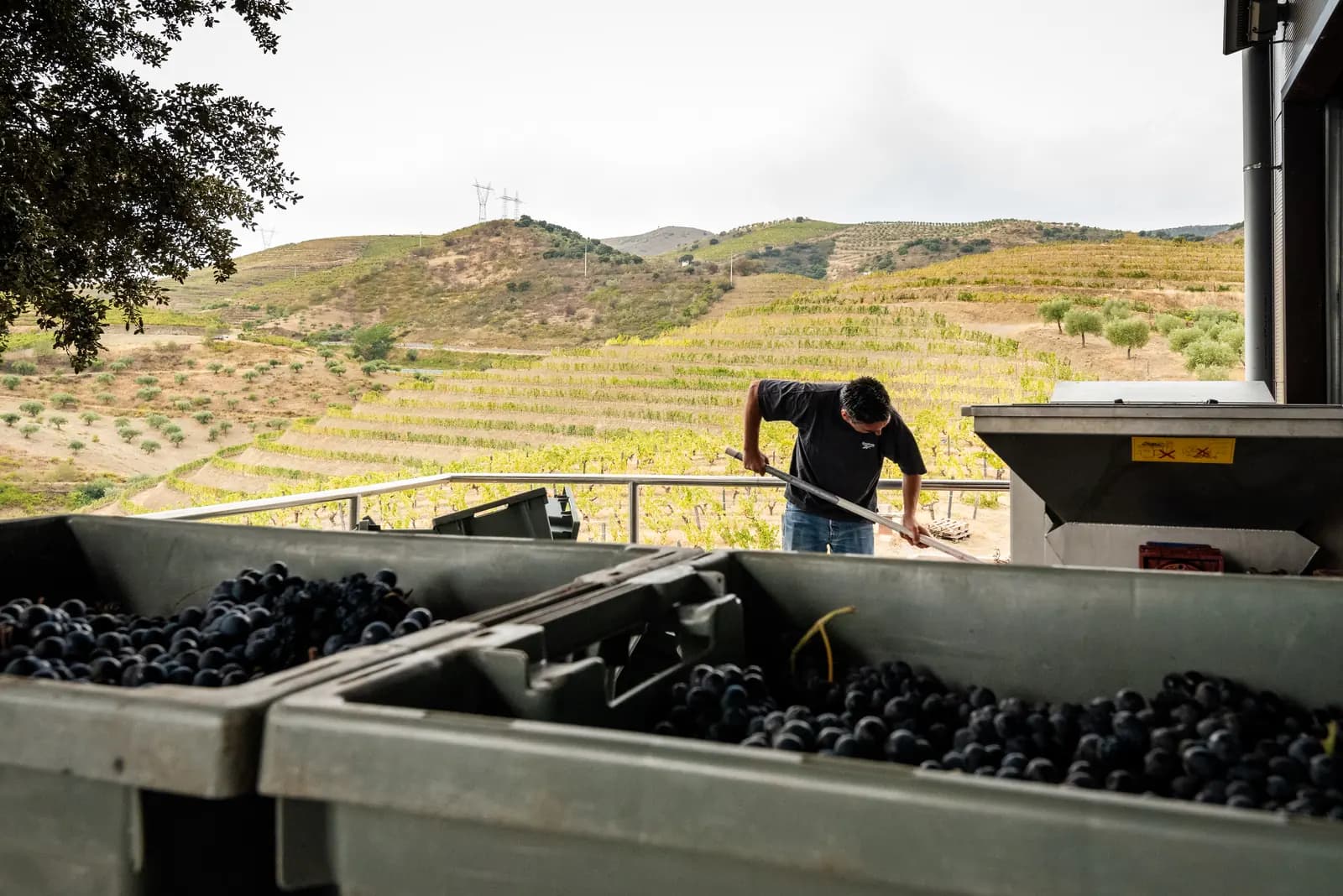
Every grape comes from the estate. That is what keeps production normally between one hundred and one hundred and thirty thousand bottles a year — what the vineyard gives, and no more.

The people who make the wine

Two winemakers. One estate.

Winemaker

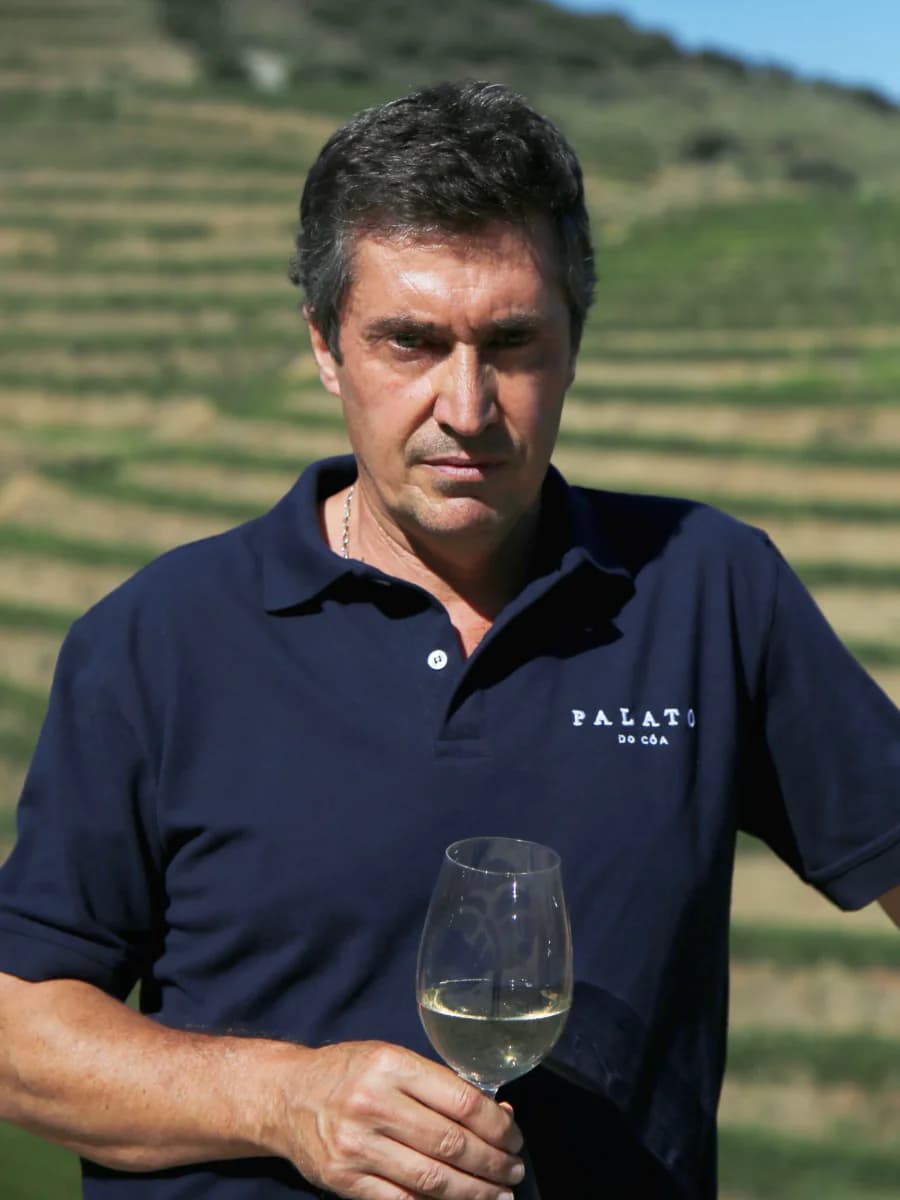
Carloto Magalhães

Carlos Magalhães, known in the trade as Carloto, graduated in Agricultural Engineering from the University of Trás-os-Montes e Alto Douro in 1992. He made the estate’s first wine in 2007 and follows the vineyard, sets the winemaking direction and answers for the identity of each range.

Winemaker

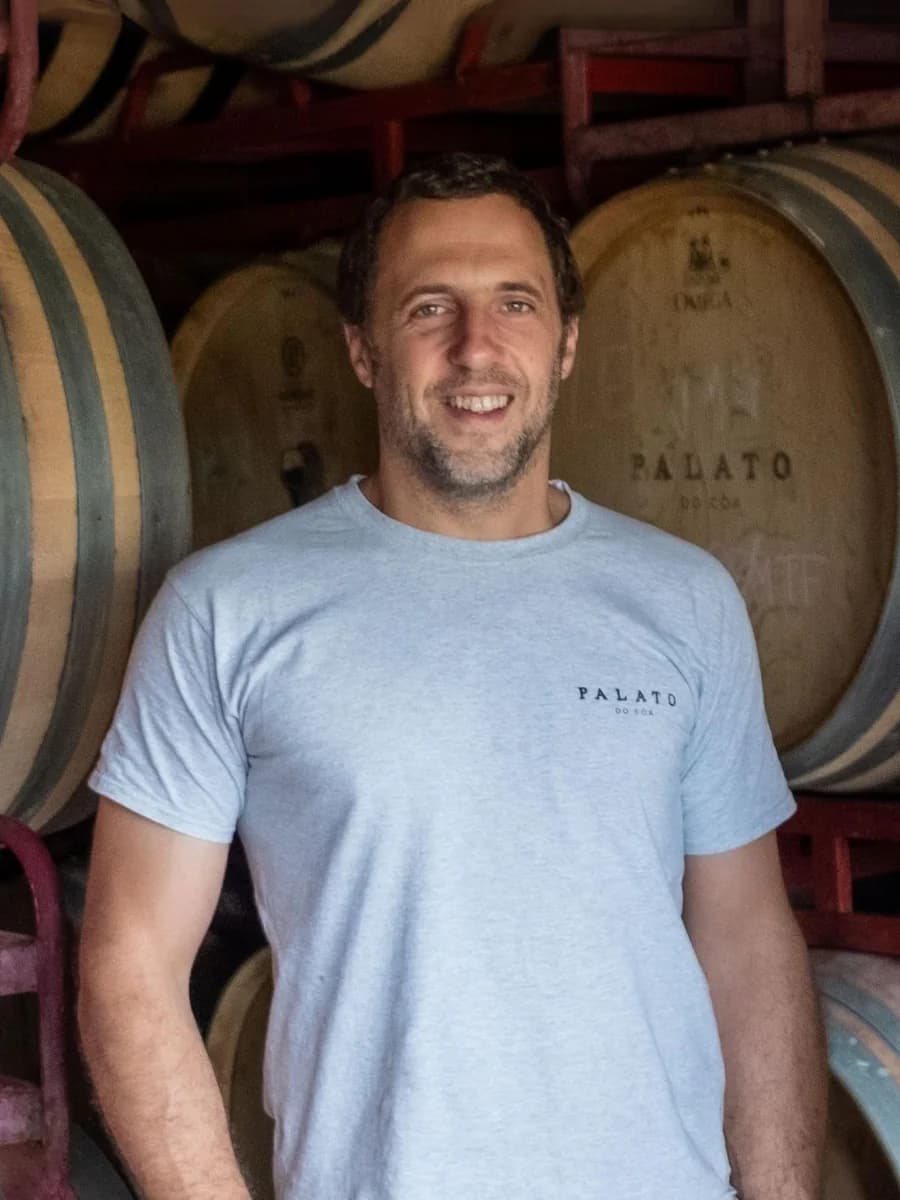
Paulo Schreck

A student of Carloto in 1995, he trained in oenology in Sauternes and worked four harvests in France. Since 2017 he has worked exclusively for Palato do Côa, coordinating viticulture and winemaking with Carloto and supporting the commercial side.

A year at the estate
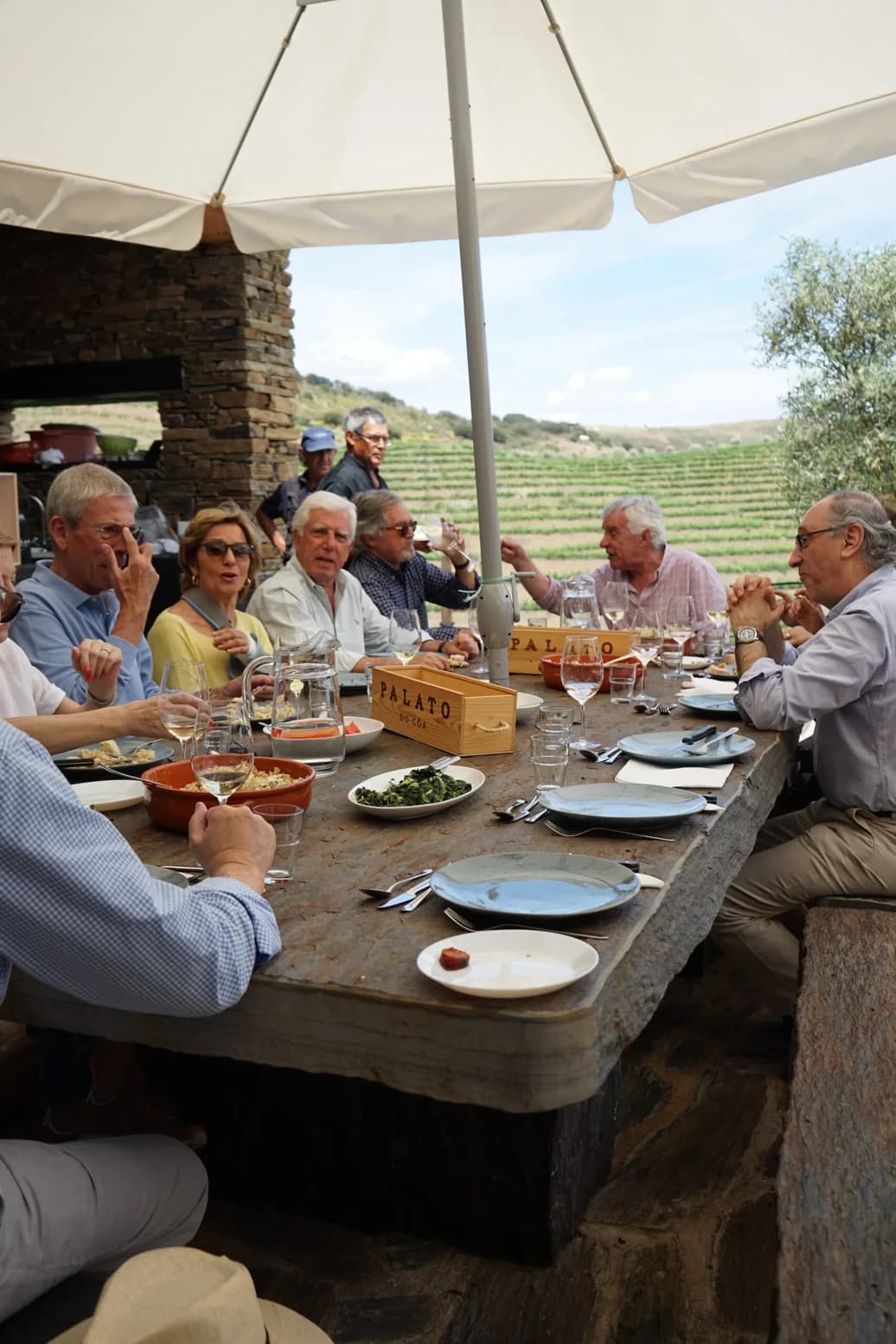
Lunch overlooking the estate vineyards
Hospitality

The table is part of the estate too.

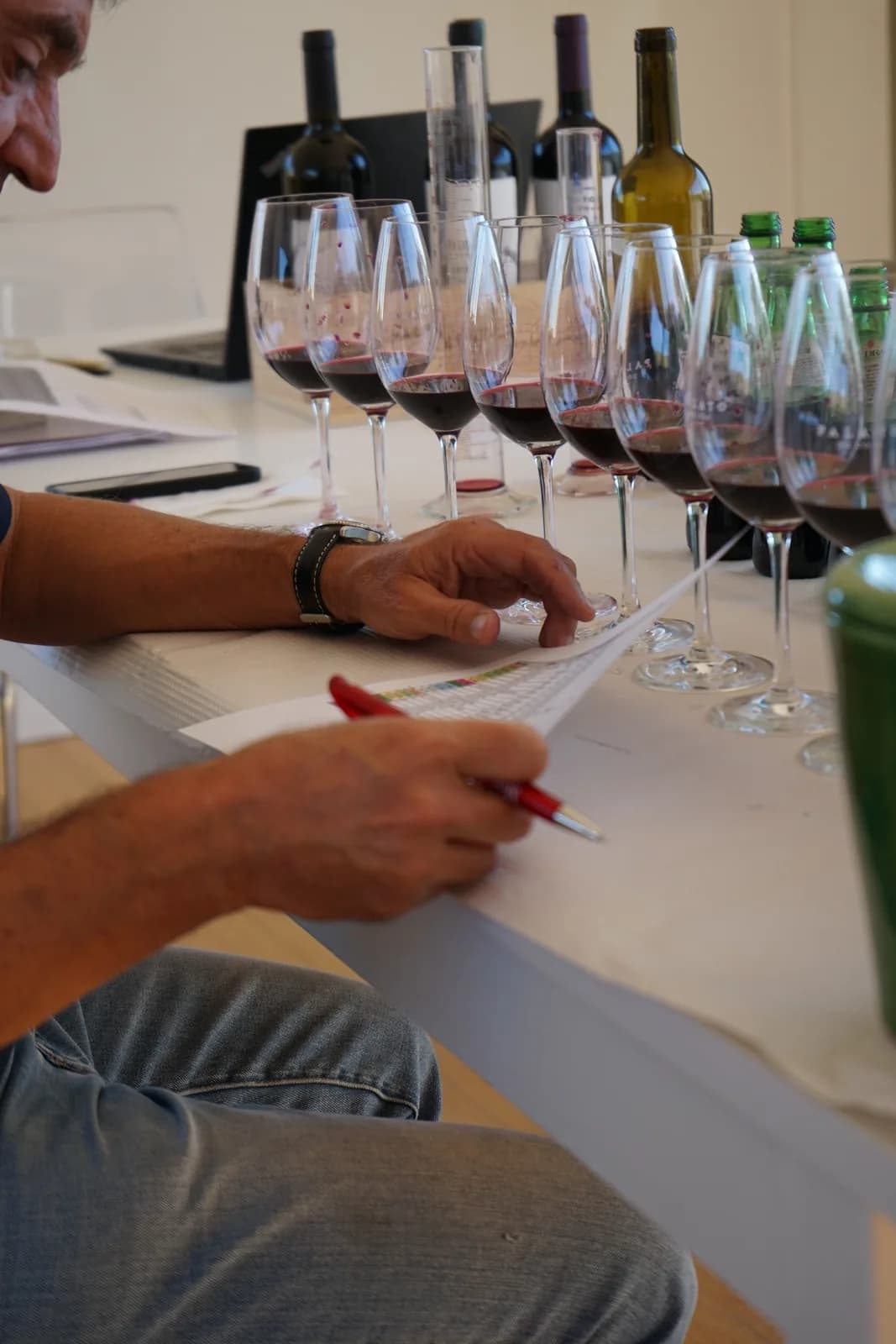
Welcoming people continues the story of the wine. A tasting happens with time, food and a view over the vines — the place where every bottle began.

Falar no WhatsApp